
How to Pronounce 'Cane Corso' (And What the Name Means)
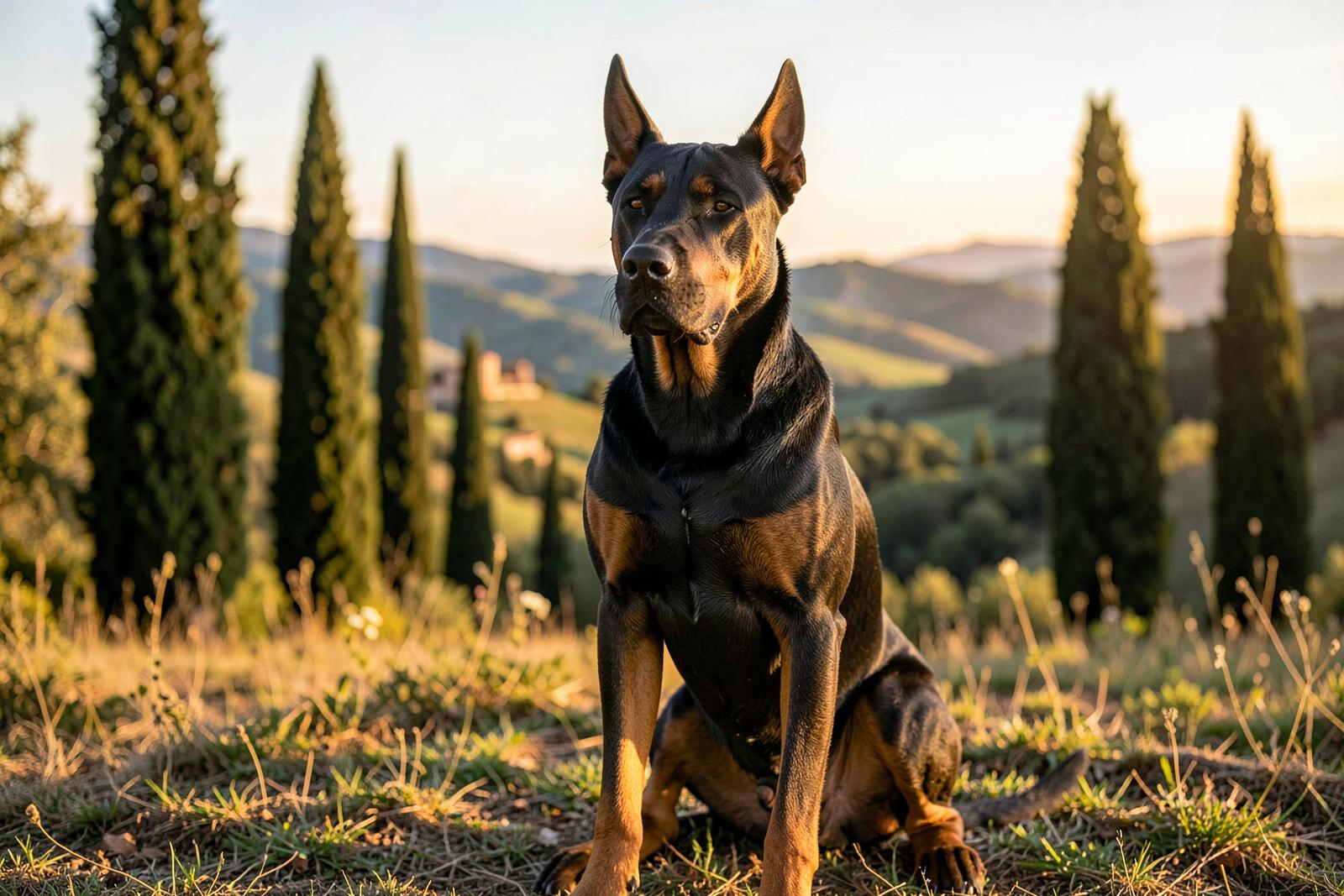
You've fallen in love with the breed, but now comes the awkward part: how do you actually say "Cane Corso" without embarrassing yourself at the dog park? It's one of the most commonly mispronounced dog breed names in English — and the mistakes are easy to make. This guide covers exactly how to pronounce Cane Corso, the correct plural, the most common errors, and the fascinating meaning behind the name.
How to Pronounce Cane Corso (The Short Answer)
The correct pronunciation of Cane Corso is:
KAH-neh KOR-so
Broken down phonetically:
- Cane = "KAH-neh" (two syllables: KAH + neh)
- Corso = "KOR-so" (two syllables: KOR + so)
The single most important thing to remember: "Cane" is NOT pronounced like the English word "cane" (as in a walking stick). It has two syllables and a soft ending — KAH-neh, not kayn.
In the International Phonetic Alphabet (IPA), it's written roughly as [ˈkaːne ˈkɔrso].
Say It Out Loud, Step by Step
If you're still unsure, practice it in pieces:
- Start with "KAH" — like the start of "car" without the r.
- Add "neh" — a short, soft syllable, like the "ne" in "net."
- Put them together: KAH-neh.
- Now "KOR" — like the start of "core."
- Add "so" — like the word "so."
- Combine everything: KAH-neh KOR-so.
Say it a few times and it quickly starts to feel natural. Many owners find it helpful to think of a gentle, flowing Italian rhythm rather than clipped English syllables.
The Correct Plural: Cani Corsi
Here's something that trips up even experienced owners. If you have more than one, they aren't "Cane Corsos" — at least not in proper Italian. The correct plural is:
Cani Corsi — pronounced "KAH-nee KOR-see"
In Italian, both words change in the plural: cane becomes cani, and corso becomes corsi. So one dog is a Cane Corso, and two or more are Cani Corsi.
That said, in everyday English, "Cane Corsos" has become widely accepted and you'll hear it constantly. Using it won't get you strange looks — but if you want to impress the Italian-speaking purists, Cani Corsi is the technically correct form.
Common Mispronunciations to Avoid
If you've been saying any of these, you're in good company — they're extremely common. But now you'll know better:
- ❌ "Cain Corso" (saying "cane" like a walking cane) — the most frequent mistake
- ❌ "Canay Corso" (over-stressing the ending) — closer, but still off
- ❌ "Cane Corzo" (with a z sound) — the s is a soft s, not a z
- ❌ "Can Corso" (dropping a syllable from "cane")
- ❌ "Cane Cor-SO" (stressing the wrong syllable) — the emphasis is on KOR, not so
The two golden rules: give "cane" its full two syllables (KAH-neh), and stress the first syllable of "corso" (KOR-so).
What Does "Cane Corso" Mean?
The name is just as interesting as its pronunciation. It comes from Latin and Italian roots:
- "Cane" comes from the Latin canis, simply meaning "dog."
- "Corso" is the debated part. The most widely accepted theory traces it to the Latin word cohors, meaning "guardian," "protector," or "bodyguard." Some linguists suggest alternative roots, but the guardian connection fits the breed perfectly.
Put together, "Cane Corso" is often translated as "guardian dog" or "bodyguard dog" — a fitting name for a breed developed over centuries in Italy to protect property, guard livestock, and serve as a loyal defender of home and family. The name literally describes the dog's ancient job.
Where the Breed (and Name) Comes From
The Cane Corso is an Italian breed of mastiff, descended from ancient Roman war dogs known as Canis Pugnax. For generations, Corsos worked Italian farms and estates as versatile guardians and hunters. The name carried that working identity with it — a "guardian dog" in both meaning and purpose. Understanding this heritage makes the name feel less like a random label and more like a description of exactly what the breed was bred to do.
How Breeders and the AKC Say It
If you listen to reputable breeders, breed clubs, and the American Kennel Club, you'll hear the same thing: KAH-neh KOR-so. The AKC even lists the phonetic pronunciation on its official breed page, precisely because the name is so widely mangled. When you're speaking with breeders or judges, this is the pronunciation that marks you as someone who knows the breed. Italian speakers will roll the r in "Corso" slightly and keep every vowel crisp and open, but you don't need a perfect Italian accent — you just need the right syllables and stress.
English vs Italian: A Note on Accent
In authentic Italian, the vowels are pure and evenly weighted, and the r gets a light roll: something close to KAH-neh KOHR-so. In everyday American and British English, most owners soften this into a comfortable KAH-neh KOR-so without the rolled r, and that's perfectly fine. The goal isn't to sound like a native Italian speaker — it's to avoid the glaring mistakes (like "cain corso") that immediately signal you haven't heard the name said correctly.
Other Tricky Dog Breed Names
If "Cane Corso" tripped you up, you're not alone — plenty of breed names are commonly mispronounced. A few notorious examples:
- Weimaraner → "VY-muh-rah-ner"
- Dachshund → "DAKS-hund" (not "dash-hound")
- Bichon Frise → "BEE-shon free-ZAY"
- Leonberger → "LEE-on-ber-ger"
Getting the Cane Corso right puts you in good company with owners who take pride in pronouncing their breed's name properly.
Why Correct Pronunciation Matters
Beyond simply sounding knowledgeable, pronouncing "Cane Corso" correctly is a small sign of respect for the breed's Italian heritage — and it helps you communicate clearly with breeders, vets, trainers, and fellow enthusiasts. When you're researching, buying, or talking about your dog, saying the name properly signals that you've done your homework, which never hurts when you're dealing with reputable breeders and breed communities.
Why Is "Cane Corso" So Often Mispronounced?
The core problem is that English and Italian pronounce vowels differently. In English, a word ending in a silent "e" — like "cane" (the walking stick) — stretches the preceding vowel and drops the final sound. Italian does the opposite: every vowel is pronounced, so "cane" becomes a clear two-syllable KAH-neh. Because most English speakers instinctively apply English rules to an Italian word, "cane" almost automatically comes out as "kayn." Once you know to treat it as Italian — pronouncing every vowel and keeping the sounds open — the correct pronunciation clicks into place and starts to feel natural.
Quick Reference Guide
Bookmark this cheat sheet:
| What | How to Say It |
|---|---|
| Cane Corso (singular) | KAH-neh KOR-so |
| Cani Corsi (plural) | KAH-nee KOR-see |
| Meaning | "Guardian dog" / "bodyguard dog" |
| Origin | Italy (from Latin canis + cohors) |
Final Word
So, how do you pronounce Cane Corso? KAH-neh KOR-so — two soft syllables for "cane," with the emphasis on KOR in "corso." Remember the plural is Cani Corsi, and that the name itself means "guardian dog," a nod to the breed's proud history as a protector. Now you can talk about your favorite Italian Mastiff with total confidence — and gently correct anyone who calls it a "cain corso."
Frequently asked questions
About The Corso Journal Editorial Team
We are long-time Cane Corso owners and writers who research each guide against breed standards, veterinary literature and the lived experience of owners. Every article is reviewed before publication and revised as guidance changes. Read our editorial standards.
Veterinary disclaimer: this article is general information, not medical advice. Always consult your own veterinarian about your individual dog, and seek emergency care immediately for urgent symptoms such as suspected bloat.