
Cane Corso Bite Force: How Strong Is Their PSI?
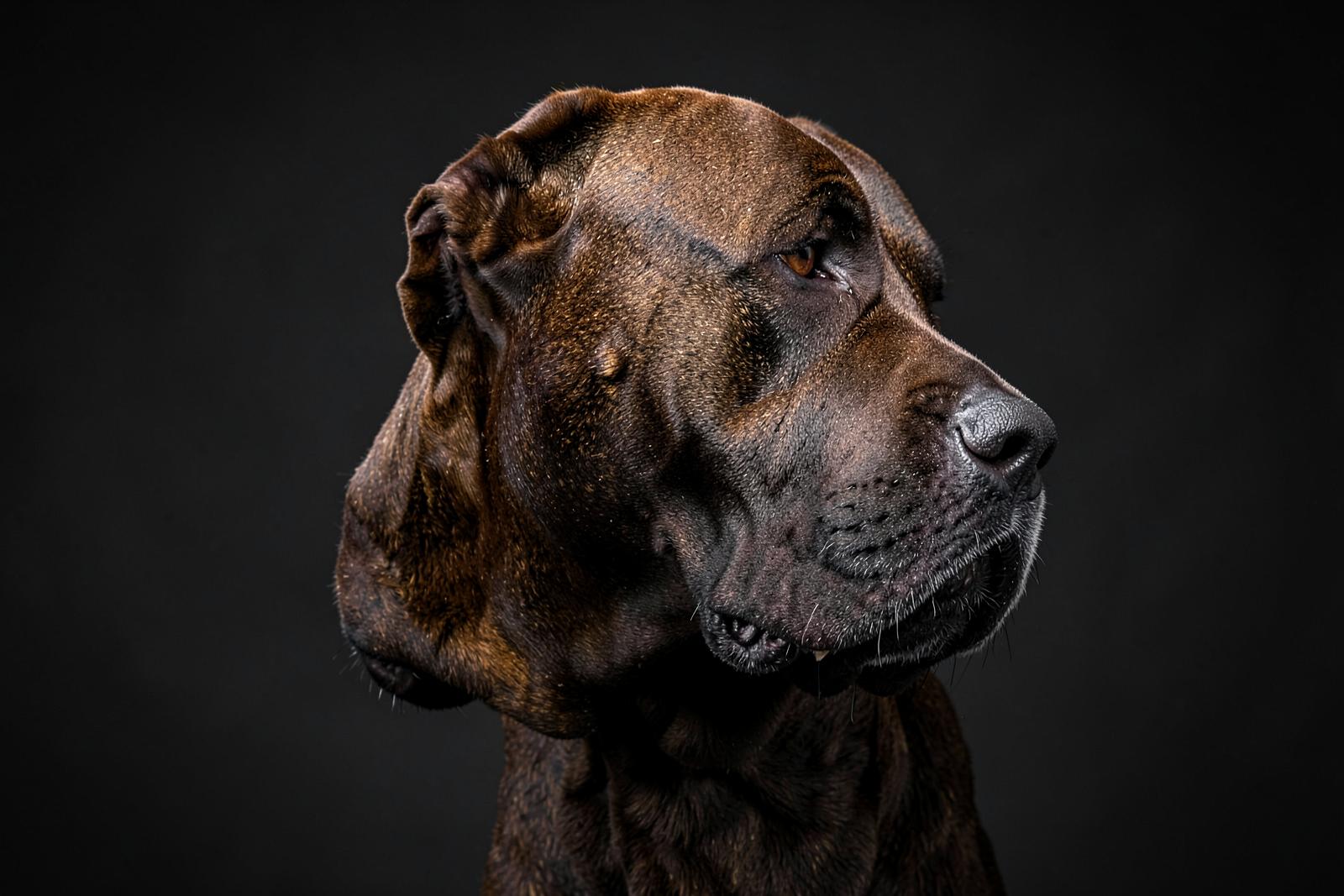
The Cane Corso's massive, squared-off head and powerful jaws make one question almost inevitable: exactly how strong is a Cane Corso's bite force? You'll see the number 700 PSI repeated all over the internet — but the honest answer is more nuanced, and more interesting, than a single figure. Here's what the science actually says about Cane Corso bite pressure, how it compares to other breeds, and why the number matters far less than most articles claim.
What Is Bite Force (PSI)?
Bite force is measured in pounds per square inch (PSI) — the amount of pressure a dog's jaws can exert over one square inch of area. The higher the PSI, the more crushing power the bite delivers. PSI is used to compare everything from car tires to alligator jaws, and it's become the standard way people rank dog breeds by jaw strength.
But here's the catch: measuring a live dog's bite force accurately is genuinely difficult, and the method used dramatically changes the result.
The 700 PSI Claim: Where It Comes From
Most sources state that the Cane Corso has a bite force of around 700 PSI, sometimes citing ranges of 650–700 or even 700–800 PSI. This figure frequently appears alongside claims that the Cane Corso has the second-strongest bite of any dog breed, behind only the Turkish Kangal (often listed around 743 PSI).
The 700 PSI number is widely circulated and makes for an impressive headline. It's also almost certainly overstated.
The Honest Answer: The Science Is Messy
Here's what most articles won't tell you: there is no clean, peer-reviewed, universally accepted PSI figure for the Cane Corso. Very few rigorous scientific studies have measured bite force in specific dog breeds at all.
The most-cited canine bite-force research measured trained police dogs (German Shepherds and Belgian Malinois) — and it recorded force in Newtons, not PSI. Many popular breed "PSI rankings" are estimates or extrapolations based on skull size, jaw structure, and body mass rather than direct measurement.
When veterinary experts and independent testers (such as those featured in televised bite-force experiments) have looked closely, some estimates for the Cane Corso come out closer to 330–350 PSI — less than half the popular 700 figure. The truth is that the real number likely sits somewhere in a wide range, and no one can state a single exact value with confidence.
What we can say honestly is this: the Cane Corso is a large mastiff-type breed with a big skull and powerful jaw muscles, so it almost certainly sits toward the stronger end of domestic-dog bite capability. But "strong end of the spectrum" is very different from "exactly 700 PSI."
How Cane Corso Bite Force Compares to Other Dogs
With the caveat that these are commonly cited estimates rather than settled science, here's how the Cane Corso is typically ranked against other powerful breeds:
| Breed | Commonly Cited Bite Force (PSI) |
|---|---|
| Kangal | ~700–743 |
| Cane Corso | ~650–700 (likely overstated) |
| Dogo Argentino | ~500–600 |
| English Mastiff | ~550 |
| Presa Canario | ~540 |
| Rottweiler | ~328 |
| German Shepherd | ~238 |
| Human (for reference) | ~120–160 |
Even if the Cane Corso's true figure is lower than 700, it still comfortably out-bites the vast majority of dog breeds — and dwarfs the human jaw. The takeaway isn't the exact ranking; it's that this is a physically formidable dog.
Why the Cane Corso Has Such a Strong Bite
The Cane Corso's bite power comes from a combination of anatomical features:
- A broad, square skull that anchors large jaw muscles
- Powerful masseter and temporalis muscles that drive the jaw closed
- A wide muzzle and deep jaw that increase leverage and grip
- Significant body mass supporting overall strength
The breed was developed over centuries as a guardian, war dog, and boar hunter — roles that favored a strong, wide, gripping bite. That working heritage is written into the modern Corso's build.
How Is Bite Force Actually Measured?
Part of why the numbers vary so wildly is that measuring a dog's bite force is genuinely tricky. There are a few approaches, and each produces different results:
- Bite sleeves with force sensors. A trained dog bites a padded sleeve fitted with pressure sensors. This works for protection-trained dogs but only captures a "commanded" bite, not a maximum-effort one.
- Transducer bite bars. The dog bites a device that records pressure directly — accurate, but hard to get an untrained pet to do on cue.
- Anatomical estimates. Researchers calculate likely bite force from skull dimensions, jaw-muscle size, and body mass. Many popular "PSI rankings" are built this way rather than from live measurement.
To complicate things further, where the dog bites matters enormously. Force measured near the front canine teeth is very different from force at the rear carnassial teeth, which have far more leverage. So even a legitimate study can produce very different numbers depending on its method and measurement point. This is exactly why you should be skeptical of any source that quotes one exact PSI figure as settled fact.
Does a Strong Bite Mean a Dangerous Dog?
This is the most important point in the entire discussion: bite force describes physical capability, not temperament. A high PSI number tells you what a dog's jaws could do — it says nothing about whether that dog is stable, well-socialized, or likely to bite in the first place.
A well-bred, properly raised Cane Corso is a calm, discerning guardian that rarely bites. Like any large, powerful breed, however, the consequences of a bite can be severe simply because of the dog's strength and size. That's exactly why responsible ownership matters so much:
- Early, thorough socialization to build a confident, well-adjusted dog
- Consistent, positive training and reliable obedience
- Responsible management around strangers, children, and other animals
- Never encouraging aggression or "guard" behavior through improper training
A Cane Corso's power is a reason for respect and responsibility — not fear.
The "Lockjaw" Myth
You may hear that Cane Corsos (or other mastiff and bully breeds) have a "lockjaw" mechanism that prevents them from releasing a bite. This is a complete myth. No dog breed has a locking jaw. A Cane Corso's jaw is anatomically the same as any other dog's, and a well-trained Corso can be taught to release on command like any dog.
The Bottom Line
So, how strong is a Cane Corso's bite force? The popular answer is around 700 PSI, but the honest answer is that no exact, scientifically verified figure exists — and the real number may be considerably lower. What's certain is that the Cane Corso has one of the more powerful bites in the dog world, thanks to its large skull, strong jaw muscles, and working heritage.
More importantly, that power is only a concern in the hands of an irresponsible owner. Raised and trained properly, a Cane Corso is a loyal, controlled, and gentle companion whose impressive bite is something you'll likely never see used in anger.
Frequently asked questions
About The Corso Journal Editorial Team
We are long-time Cane Corso owners and writers who research each guide against breed standards, veterinary literature and the lived experience of owners. Every article is reviewed before publication and revised as guidance changes. Read our editorial standards.
Veterinary disclaimer: this article is general information, not medical advice. Always consult your own veterinarian about your individual dog, and seek emergency care immediately for urgent symptoms such as suspected bloat.